Monday, July 28, 2008

Shit! (literally...)

7-28-08

And the bad luck continues—I have horrible diarrhea, and spent most of last night puking and shitting every available substance out of my body. I swear, I don’t know what’s up with this trip. I’ve never had this many things go wrong in a single journey…But it’s kind of in an odd way too: bad luck that I left my passport at Uncle Ed’s, but good luck being able to rent the car and get out and back in time to catch my bus to Nicaragua; bad luck that the school structure is pretty mediocre and a lot of the teachers aren’t trained, but good luck that I got three of the best teachers at the school and have been able to make it what I want; bad luck getting mugged, but miraculous good luck to not have anything stolen; bad luck with the iPod, but good luck that it was returned to me only slightly the worse for ware; and finally bad luck (and horrendous timing!!) to get sick on my last night here in Ometepe, but good luck that the owner of this hotel is accommodating and won’t make me pay for the extra night that I’m probably going to need to spend here. Ridiculous.

I’m feeling better this morning, but still woozy when I stand up, so I’m going to try to sleep all day. The owner also said that he’ll have his employees bring me juice every two hours to rehydrate… I haven’t tried to eat anything yet… I don’t think that’ll be a good idea for a while, but I hope that tomorrow I’m feeling well enough at least to travel!

I’m so ready to leave Nicaragua! I hope that when I get back to Granada I’ll be recovered enough to enjoy my last couple of days, and despite everything it has been a fun trip, but man. What I wouldn’t give for a teleport machine…..

Sunday, July 27, 2008

No Hay Cajero Automatico

7-27-08

I have been on the computer way too much today, but I suppose its ok, since I got some pending emails sent, and worked a lot on my poems….

Yesterday I went kayaking out to the Rio Istian—it’s not really a river, it’s a swamp, but it’s shaped like a river on the isthmus between the two volcanoes that make up Isla Ometepe. It was about an hour and a half of hard paddling to get out there because the wind was blowing, hard, directly in my face. I was so tired when I got there! But it was worth it. I saw some awesome birds, a bunch of wild cows staring at me, and some lovely mangrove-type trees (I’m not sure if they were mangroves, because the water isn’t salty…). The way back was a bit harder than I had expected, mostly because of my blisters, but I made it back to the hotel tired and happy, though a bit sunburned.

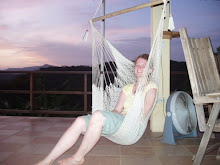
I didn’t do much for the rest of the day, but I did ask whether or not I could pay with a credit card here (the answer was no), and if there was an ATM nearby (also no)… It turns out that I have just barely enough cash to pay for the room, the food and the kayaking, but I have to sleep in one of the dorm beds tonight (instead of the single room) to be able to have enough cash to get home… Oops!! So I didn’t get to go horseback riding today because I couldn’t spare the 10 bucks to pay for it… bummer. Instead, I finished my book, wrote some emails, worked on my poems, and have been nursing my sore, sore shoulders and arms. After writing this I think I’m going to take out my iPod and have a nap in one of the hammocks. There are many fewer people here now, so it feels less like a backpacker hangout and much more like a lovely, tranquil spot to relax.

Tomorrow I’m off back to Granada. I’ve made up a list of things I still want to do there, but it’s crazy that I’m already at my last week of school. Crazy, but good. I’m getting psyched to see Lisa at the airport! And I’m definitely feeling ready to come home. Hooray!

Friday, July 25, 2008

Guardian Angel

7-24-08

Well, quite a bit has happened since I wrote last! Week three of school passed fairly uneventfully. I spent my afternoons doing homework, hanging around with Steve and Todd, and on Wednesday I went to another baseball game with (among others) a girl I had met named Divea. She’s originally from India, and is here in Nicaragua for 4 weeks essentially on a free ride; she’s a Spanish teacher from the Chicago area, and in exchange for being a chaperone for her students on the plane here and then on the plane home she gets to stay in Granada, living expenses paid! Pretty sweet deal!

Saturday the 19th was the 29th anniversary of the Sandinista Revolution. The Sandinistas were allied with the Soviet Union, and over threw the Somoza dictatorship—a man and his two sons whose stints in power are sort of melded into one era of suffering for the people and extreme wealth for the Somoza family—in 1979 after a long struggle. The Sandinista era seems to have been marked by the same downfalls of other communist countries; they began with good ideals, but the execution was lacking. At some later date, at the request of various human rights organizations, they held open, fair elections, convinced that they would win. They were instead vehemently booted out of office in favor of a problematic democracy with which the Nicas are still struggling. The Sandinistas have now re-formed into a legitimate party with the initials FSLN of which the current president, Daniel Ortega, is a member. He sounds just like most other politicians; he talks the talk, but doesn’t get much done. This is in part because of the Nicaraguan bureaucracy, but largely because of his (and his party’s) sympathy with Castro and Chavez for which our government (and Japan’s, and probably a few others) applies a lot of pressure making change almost impossible.

Steve and I decided that we would head over to Managua (the capitol) to see the celebrations of the anniversary. It was quite the rally—presidents and other officials from countries like Ecuador, Argentina, Cuba, Peru, Venezuela, Panama, Honduras, Guatemala and others were in attendance on an elaborately set up stage. Notably, Hugo Chavez himself was there in addition to the wife and daughter of Che Guevara. Unfortunately, the Plaza de la Revolution is very large, and there were 20,000(?) 30,000 (?) people around us who also wanted to get closer to the stage, so I didn’t really see any of these people up close, but I was in proximity! Also, the speeches didn’t really start until about 6:30pm, after Steve and I had already left. What we did get to see was the parade in of the party members with red and black flags, t-shirts, face-paint, etc., (which went on forever!) and we heard many songs of the revolution. It was wild to think that many of the people there were alive during the revolution, and especially to see (visibly in some cases) that they had participated in the fighting. It is something wholly other to be at a political event commemorating a still very real and present revolution than to attend something like our 4th of July. There was an aspect of the picnic/party atmosphere—families were there, and especially at first everyone was dancing and singing (and drinking) and waving flags—but at some point (probably as the drunks began to get bored with the long introductions of all of the dignitaries in attendance) the mood shifted. Fights broke out, and a rather more militant celebratory attitude began to be felt near the surface. Steve and I picked that as the right moment to get out of there! We arrived back in Granada without incident—though before we left we did witness a man being chased and then beaten by about 15 people for who-knows-what reason—and decided to meet for a drink after each returning to our respective homestays.

Over beers we talked about how much safer we felt in Granada, and how, though Managua may be interesting for political reasons, we didn’t really think it was worth any more than a day trip. We were both relieved to have returned to Granada without anything happening, and after hearing that Chavez’s speech consisted mostly of “imperialist” USA bashing, we were glad that we left when we did! Steve being from Ireland, we are probably two of the whitest people in general, let alone in Nicaragua!

After our drink, we walked back towards our houses. Steve lives about 2 blocks west and 2 blocks north of my house, and despite the fact that I almost never walk alone at night I decided to walk by myself in the rain back to my house from Steve’s. This was absolutely the single most idiotic decision I have ever made while traveling. I rounded the first corner, and noticed a drunk on the other side of the street, walking back towards town, but didn’t think anything of it. I turned the second corner and realized that he was following me. I shifted my 1.5 liter water bottle to my right hand, as a precaution, and then I heard him run up behind me. I swung, and I think I hit him in the head, but I’m not sure. Some other force took over, and I started screaming. The phrase “screaming bloody murder” would appropriately describe what I was doing. The man made a grab for the strap of my little purse, and got a handful of my long-sleeve shirt also, in which he ripped a great big hole. Now here’s the lucky part: when he yanked on my bag, the strap came totally dis-attached from the bag, and he ended up with just some shirt and the strap in his hand. That other force somehow enabled me to (I think) hit him with my umbrella, while screaming, and (and this is the part that baffles me when I think about it) step forward to get my bag from the ground. I think the would-be thief ran off, and I ran the last block and a half to my house, past the people who had come to their doors, but had not come out to help. Once in my room, I was hysterical. It was the proverbial nightmare, the man assaulting from behind, and two thoughts ran through my head: how could I have been so stupid as to walk home, in the dark, alone? and I was so lucky. I am so thankful that nothing worse happened—and I thank whatever force protected me that night.

When I had calmed down enough to think about sleeping, I realized that my over-active imagination would never allow me to rest, running through all of the things that might have been. I looked for my iPod, as a form of distraction, and couldn’t find it. It wasn’t in my room. This on top of everything! I watched bad tv, dozing slightly until 5 or 6 am when I was finally able to sleep a little. Then I got up and told Sarah and Katia what had happened. They both chided me multiple times for my bad decision, and I fully deserve to be chided… I’m usually so paranoid about that kind of thing, but for some reason I had a lapse, and I paid for it. So much for mine and Steve’s conversation about safety in Granada! (though to be fair, what happened could have happened in any city in the world. Granada really is quite safe, especially as Central American cities go.)

Katia was mortified that my iPod was missing, and assured me over and over that nothing like this had happened before and that she would make it right. I spent Sunday alternately crying and feeling exhausted, driving around to look for my iPod with Katia. The upshot was this: at some point, either when I had forgotten to lock my room (which I did do a few times) or when Sarah was changing sheets or doing laundry, Katia’s 14 year old nephew snuck into my room and stole my iPod, headphones and computer connector cord. He hid it in his ceiling, and his justification was apparently that he wanted to listen to music. That little shit!! What creeped me out was that my iPod was never just sitting on the desk; it (along with the cords) was in a little pocket in my backpack, so that kid must have gone in and rummaged through my stuff to find it. I don’t think he could ever have seen me with it as I hadn’t listened to it since I had it out on the bus from Costa Rica. My computer was out on the floor, and I had about $200 in cordobas in the room, but all he took was the iPod. He plugged it in to his computer, erasing all of my music (thankfully not a problem as my entire library is saved on my computer and I simply restored it) and changed a bunch of settings. He pulled off part of my sticker/iPod cover, and I think his hiding place in the ceiling got a bunch of sticky shit all over the back. Katia told me that this was not his first offence and that he will likely be headed for correctional school.

Again, I feel as though I am protected (though warned!) by some force; I have my iPod, and I am not going to leave Katia’s house. Despite what happened, I do trust her, and Sarah, and I do feel safe in Granada. Needless to say, I won’t be walking ANYWHERE alone after 6 pm. If I hadn’t been attacked—strange as it is to say—I don’t know when I would have realized that my iPod was gone. It might have been too late. I am glad that I have decided to stay, but man, I will be so ready to get on that plane back to the states when the time comes!

Monday felt long, and the agitation over the weekend made my mild cold much worse, but by the end of the say (after talking to my mom, dad and sisters) I felt much better. In spite of everything, I felt the most comfortable speaking Spanish on Monday that I have felt the whole trip! I think something has shifted—it’s getting easier by the day both to speak and to understand people.

On Tuesday, Steve and I hiked out to the Laguna de Apoyo, the now idyllic remains of a once enormous volcano between Granada and Masaya (I could see it from the Mirador in Catarina). The hike out was pretty mellow, through some farming communities and lovely fields on a small dirt road with the occasional arroyo making a big ditch in the middle. When we got to the Laguna, the path dropped steeply down to the water. It was bath water temperature, just slightly salty, and a clear, deep blue that was disconcerting to swim over—my book says that the deepest measured point in the Laguna is the deepest point in all of Central America! We didn’t stay long, both because of the gathering rain clouds and because we didn’t want to still be walking after dark, and got totally soaked in the ensuing downpour. This, too, did not help my cold! It was a great trip though, despite the soggy ending…

Wednesday was another baseball night, this time a double header! Granada lost the first game 1-4 to Matagalpa, but rallied for the second, which ended with the same score, only reversed. Despite conflicting reports, I think I’ve finally figured out where we are in the series: somewhere in the semi-finals, with varying reports on when the finals might start or end. I will most certainly go to another game next week before I pack up to leave Granada! It’s become a very fun Wednesday night outing with my teacher Olga (she’s the most fun!), Pati (the school secretary/gofer/errand boy), Steve and various other students.

I’ve written this in my hotel room in Mérida, on the Isla Ometepe, but now it’s time for bed, so the story of how I got here will have to wait until tomorrow! It’s all one big adventure, this thing called life, and while traveling it seems that it’s best to just surrender to it sometimes….

7-25-04

So here I am in Mérida. On Wednesday morning, I found out that two of the other girls at the school were planning to come to Isla Ometepe also, and happened to be staying at the same hostel that I am. They are living in the same house as Divea, and were planning to travel with her. One of the girls, Lindy, essentially decided (without my saying anything) that I should travel with them, but she (luckily…) didn’t get in touch with me early enough and I ended up not seeing them until I arrived last night.

So, Thursday morning, I took two hours of class, and then went down to the bottom of the market street to board a bus for Rivas. The only seat still open next to a window happened to be the tire seat (Central America seems to be the graveyard of school buses—most of the public transport is on old busses with broken seats and windows), and so I spent the hour and a half ride with my knees up. My sits bones were aching! However, we arrived in Rivas without incident. I hopped off the bus and asked two of the many other tourists if they were going to the port, San Jorge, and if they wanted to share a taxi. Luckily, I had emailed with the manager of the hotel and she told me how much to expect to pay for that taxi—the crowd of taxistas were intent on ripping off all of the confused tourists—and we moved a bit away from the crowd. One of the locals who had ridden on the bus must have heard the taxista trying to get the three of us (me and the other two tourists) to pay 40 cordobas per person, or heard me saying that it was too expensive, and so he asked us if we would like to go around the corner to where he knew there were taxis for 15 cordobas per person. He seemed like a nice guy and after talking to him for a minute we walked with him. We all got in the car (he was going to the port too), and arrived there shortly. The other two tourists went there own way, but I continued talking to the guy. He told me that there was the ferry, or I could take a “lancha” (a smaller boat) for less. It seemed like a lot of people were paying for tickets on the lancha, and so I decided to do it.

Within a few minutes we boarded, and were down in the bottom of the boat—another home for old, broken school bus seats!—and waiting to get going. It seems that I made the right decision; as we were setting out (a little late), the ferry was only just arriving, so if I had chosen that option I would certainly have missed my bus from the port city, Moyogalpa. Nonetheless, the lancha was quite the boating experience—my feet got splashed for the whole first (and much wavier) part of the ride, attesting to the holes in the sides of the boat. It seemed sea-worthy, but very much patched together. Initially the sides of the boat were open and I could see out, but when we got out a little further, the water started splashing in, so they pulled tarps over the windows to keep the water out. Usually, I really like boats, and I don’t get motion sickness that often, but immediately when they “closed” the window, I started to feel sick. The waves were pretty intense at that point in the journey, and I wasn’t sure I was going to make it! Eventually I pulled the tarp up just enough so that I could see out, and I started to feel better. After a little over an hour we arrived in the port, and I got up, out and over into the bus for Mérida.

I thought I was going to have to stand for the journey, but then I saw my friend from the taxi and the lancha, and he made room for me on his bench. He told me that the bus would have to go from Moyogalpa all the way over to the other port, Altagracia, before re-tracing its path to head south for Mérida. Such, it seems, is the way of things! I wasn’t much fazed—I had planned Thursday as a travel day, and thought I wouldn’t be getting to Mérida before dinner time. On the way to Altagracia lots of people got on and off the bus, making it go quite slow, but I ended up talking to my friend and also the man in the seat in front of us about language and learning languages, the increasing importance of Spanish in the US, Nicaraguan politics, things to do in Mérida, festivals in Moyogalpa, and finally—and rather strangely—sushi which then led to Chinese food, and the Chinese practice of eating dogs and cats. They were very friendly men, and I felt triumphant about my speaking abilities: not perfect, but I think I did really well. It’s getting a little easier….

Both men got off in Altagracia, along with about half of the local passengers on the bus, leaving various tourists along with fewer locals. The scenery on the bus ride was stunning—cloudy fields lit with gold evening light, and a few lovely moments on the isthmus where I could see Volcán Concepción (the bigger one) out one side of the bus and Volcán Madera out the other. Somewhere fairly close to Mérida it started raining, and everyone tried to put up their windows—it was like a cartoon, with people trying over and over to put the window up, and every time having the window slide back down. By that point in the trip the bus was empty enough that everyone ended up on their seats towards the middle of the bus, trying to avoid the water. Luckily the rain had stopped by the time I got to my hotel, Hacienda Mérida.

I knew from the description in my book and from the website that this place was likely to be a young, hip backpacker destination, but it’s a little ridiculous. If you like that sort of thing, it’s really a paradise—there are people (mostly under 30, it seems) from all around the world, hammocks strung up all around the common area, internet access (despite being very far from most things!) and they ring a bell for the dinner and breakfast buffets where everyone comes out and sits down together at the many tables for their meals. It’s got a similar atmosphere to a hostel where I stayed in Nice, France—the old villa of Antoine Saint-Exupery (author of “The Little Prince”) which now houses almost everyone under 25 who goes to Nice.

All of that is very well and good, but it’s more overwhelming than I had imagined. I was planning on using this weekend to have some privacy (in my homestay, I have two windows that look out on the patio in my house, and there are almost always people out there who can pretty easily see into my room), spend some time relaxing and most importantly to so some writing and editing of my poems. The atmosphere is not exactly conducive to those activities (except the relaxing part), and my plans have also been a bit scrunched by the other girls from Granada who are here. Anyhow, I’m going to make what I can from it—this afternoon I’m going to spend editing poems, and then they’re leaving tomorrow, so no big deal!

This morning the four of us (Lindy, her friend—whose name I can’t remember—, Divea and I) went to hike up to the San Ramon Waterfall, supposedly about 2 hours walk from the hostel. I had planned this hike as one of my activities for my weekend, and the others said they would be going this morning and invited me along, so we set out. Had I done the hike solo (as planned) I would have been up at the waterfall fairly easily within the two hours, but Lindy and her friend are just about the slowest walkers I have ever seen. Divea and I would go ahead, but then have to stand around and wait for 10 minutes every couple of turns in the road for them to catch up. The hike was along the road for about 3 km, then into the Volcán Maderas reserve, on a smaller road for about 2 km, and then the last 1 km (or possibly a bit more) was on a trail. It was gorgeous! We got several lovely views of the lake—despite the overcast weather, which actually made hiking much more comfortable—and saw lots of exotic insects, birds and plants. It was all going along peachy (though very slowly, with Divea and I still walking ahead and then waiting) until about where the small road turned into a path, and it came out that the other girls had only brought one bottle of water for the three of them! Lindy and her friend said that they had had no idea that the waterfall would be this far (and this much up hill), which is ridiculous. Where else could the waterfall have been but up the side of the volcano? To have a waterfall, you need some cliffs for the water to fall off of….

They kept trucking on—by then it was mid-morning, and I could have already been up and back down—until we got to a part of the trail where—we found out later—there had been a huge mudslide from all the way up at the waterfall probably half a mile back down the side of the hill. This slide happened only about a month ago, and it’s quite a landscape now—the volume of land that moved is really amazing. The trail kept going forward, though it crisscrossed the stream, and was more foot prints than trail, as much, and we could see that we were getting quite close to the waterfall, but the other three were scared of the mud, lack of trail, etc. and dehydrated (I had shared some of my water, but two bottles is not enough for four people either). I was actually enjoying myself; you had to clamber in and out of the stream—really not much water, less than a foot deep in places where you could stand in it—up and over rocks, and though it was clear that destruction had reigned there very recently, the rocks were stable in the drying mud, and you only sunk a little (less than an inch) where the mud was soft. It became clear that the other girls wanted to go back even though we could see the waterfall, and so, after I convinced them that I would head up to the waterfall alone and then meet up with them later, they started back down the trail.

After some more clambering I got to the fall—it’s not very much water, but it’s falling from so high up! Very stunning, especially to think about where that mass of land that careened down the hill came from. At the base of the fall I found another group who had a guide—it turned out that there was a bit (really not much) of a path that they had used which was probably marginally easier than the way I had come up. They were in sandals! And seemed to have had no problems, though to be fair those sorts of things are less scary for those with fears with a guide. I put on my suit, and stood under the cold! water for a few minutes, felt the spray, took a few photos, and then packed up to head home. Since I had delayed so much with the other girls, it was already after noon, and I was feeling pretty hungry, so I wasn’t that motivated to hang around!

So, we had left the entrance to the park around 9:45, and I got up to the fall itself at about 12:20. I left the fall at about 12:45 and was back down by 1:15! Going down is faster, but the trail was certainly not THAT steep. Man! I so wish I had decided to go alone!! The girls were waiting in the restaurant at the entrance to the park, where they had bought some water, and they made me feel like some kind of crazy dare-devil (which, though I am adventurous, I certainly am not in this case—there were other people going up there, and it was safe), saying how worried they were about me, and how glad they were that I was safe…. I appreciate the sentiment, but really, their fears were all out of proportion. It annoyed me that they were so concerned about my jaunt up the river bed, and I didn’t want to listen to them talk about it all the way back down the road, so I headed off walking (they had ordered food also, and were going to eat in the restaurant) back to the Hacienda. All in all, even with the annoyances caused by my unprepared and over-faced companions, it was a really fun outing! When I got back, I took a blissful shower, had some lunch, and came back to my room to write. I’m really pleased that the other girls are leaving tomorrow, and I won’t feel obligated to go on any more outings with them…

Tomorrow and Sunday I’m hoping to go kayaking and horseback riding—I’m not sure in which order, but one activity per day. Then I’ll be making the long trek back to Granada on Monday for my last four days of class. I think I’ll probably pay the extra cordobas to take the nicer Ferry back across to San Jorge, especially since busses go to Granada every hour or so, and I won’t be in a rush!!

Monday, July 14, 2008

Masaya and Los Pueblos Blancos

7-13-07

What a weekend! It was quite a whirlwind. The traditional live music turned out to be more of a classical guitar concert (which suited me fine—I love that kind of music) along with an eclectic group organized by a large man from Switzerland, who played everything from Irish Highland dance music to baroque pieces using mandolins, ukuleles, guitars, a guitarón (large Mexican guitar, sounds kind of like a stand up bass), baroque string instruments, a lute, a flute, penny whistles, train whistles, bike horns, clown bells, spoons, small percussion instruments and brooms. They were very talented, and each of the 5 musicians played at least 4 different instruments during their part of the concert! All in all a very enjoyable evening.

On Saturday I got up early and got on an “expreso” bus to Managua which (I was told) would drop me off in Masaya. The bus was packed, and I completely missed the stop for Masaya, had to get off somewhere close to Managua, cross the highway, and catch another bus going the other way. Luckily there are plenty of busses that run throughout the day between Managua (the Capital) and Granada (with Masaya right in between) so I righted myself without too much trouble. The next hurdle was orienting myself once I got in to Masaya—a very helpful (but difficult to understand) woman told me where I ought to get off to go to the National Handicrafts Market—Masaya’s main attraction—but her directions were confusing, and I knew that my hotel was not in the same part of town as the Market. I wandered around for a bit looking for street signs (there aren’t any) and then asked some people at a shop how I would go about walking to my hotel—the map in my book was very helpful for this, and they pointed out where we were and showed me how to get to the hotel. As it turns out, Masaya is not a very big city, and after about 10 minutes, I was in my room and getting my stuff ready to head up to the Pueblos Blancos.

Given my recent bus fiasco I decided to suck it up and pay the whopping $3 for a cab up to Catarina Mirador, a touristy look out at the top of a pueblo called Catarina where you can see out over the Laguna de Apoyo all the way to Granada, and out to the other side of Lake Cocibolca. It is an absolutely breathtaking view—when you walk over the little hill to the park/viewing platform, it feels as though you are going to plunge the many hundreds of meters down into the Laguna. It is immediately apparent how BIG the Laguna is, and the wind coming up from the (formerly volcanic) crater is blissfully refreshing after the constant heat of Granada. After gaping at the view for a while I walked out along the ridge, through the little park they have there set up with fountains and benches (and horseback rides for 10 cordobas/.50 cents), and found an exit to the park on the other end, away from the tourist restaurants and shops. From there I walked back toward town, and got to see a much different part of the pueblo—the school and the soccer field (even the poorest towns have them!), some shacks and some small houses with a very tucked away-rural feeling. They also have some exquisite nurseries in Catarina with all manner of wooden and ceramic hanging flower pots, and big lovely smelling tropical flowers.

From Catarina, I walked down the hill and crossed the highway into San Juan del Oriente, the town where much of the ceramic in Nicaragua is made. As I walked through the town, I talked to a series of very cheerful shopkeepers and saw hundreds of BEAUTIFUL pieces of pottery that I wanted to take home. A little off the beaten path of shops with bright hammocks and trinkets crammed into tiny spaces I found an artisan who gave me a demonstration and explanation of the traditional Nicaraguan method of making ceramics. They use kick-wheels—much the same as the ones you can find in ceramics studios in the US—to throw the pots, and then they paint them with several layers of a special sort of paint (I’m not sure what it’s made of). The pot then dries for a few days, and then gets polished, and then painted again with a design. Then in dries again for another few days, and then they trace the designs pained on by carving out some of the clay, making more patterns within the design of the paint. Then it sits for a few more days before sitting in an oven for a couple days. Long process! In the states, pots are fired in a kiln twice, at very high temperatures, but the Nicaraguan technique (which dates from the 1200’s!) only fires the pots once, for a longer period at a lower temperature.

After buying a couple of small pieces, I wound my way back up to Catarina, where I found the mirador (lookout) crowded with tourists—I’m glad I went early! I had a quick lunch, and then walked back to the highway where I caught a bus (6 cordobas/$0.30) back to Masaya. After dropping my loot in my room, I walked out to the Malecón, a somewhat run-down walkway at the edge of town overlooking the Laguna de Masaya. As it usually is in the afternoons here (in fact, as it has every afternoon that I’ve been here…) it was raining and misty, but I had my umbrella, and the clouds made for a very eerie, haunted view of the smaller Laguna with its dramatic cliffs. After walking along the Malecón, I headed back the way I had come to the hammock factories. These seem to all be family owned and run out of houses on the west side of Masaya. There are several traditional designs, and each house that I went to had variations on the theme, but I found one hammock whose colors and size seemed perfect, and so I bought one! Size-wise, it is by far my largest purchase while traveling, and no doubt it will be a pain in the ass on my way back to Costa Rica, but it was worth it! It’s hand-woven, about 9 feet long when stretched out, and is threaded through two wooden pieces (one at the head, one at the foot) so that it’s held open. Wrapped up it’s a fat, yard and a quarter long bundle that I hope I can strap to my backpack without too much trouble! The woman who sold it to me told me that it took about 4 days to make, with several family members helping. Wow!

With hammock nicely wrapped up and in hand, I walked back to my hotel to set it down, and then went out again to round out the day with a bit more shopping, this time at the National Handicrafts Market. After seeing where the goods were made (and the “warehouse” prices…) I wasn’t that thrilled with the market. It was crowded with tourists, and the vendors were much pushier about making a sale than anyone else I had encountered that day. I did find some good T-shirts, and saw some lovely paintings that I wished I could transport. I also saw a neat wooden mask that I would have liked to buy, but couldn’t because I had run out of cash. Next time! By 5:30 I was exhausted, and all the shops blurred into one mass of bright colors, so I went off to have some dinner and then walked back to the hotel.

This morning I woke up to no power! As my room was downstairs in the hotel, it only had one window looking into the main courtyard/breakfast area, so I had almost no natural light. Packing up was a challenge, and I was so worried I was going to leave something behind! After eating breakfast, I asked one of the women for a flashlight, and did a once over of my room to make sure I didn’t forget any thing, and then, with my bags locked up with the front desk, I hopped in a taxi to go see the Volcán Masaya Parque National. This park was the highlight of my trip so far! According to my book, Volcán Masaya is one of the most visibly active volcanoes in the country, and it spouts something like 50 tons of sulfur into the air daily. The landscape around the volcano is strange and broken, and as you drive up to the crater you can see big craggy patches of petrified lava sticking out from the vegetation. The crater itself is one of the most awe inspiring things I have ever seen; it’s huge, with a great column of white smoke billowing up out of the volcano’s maw. The rocks are deep red, black and startlingly white in places, and where you might think to see sedimentary layers you find instead the broken surface of the wall, very clearly in tumult still from its 1852 eruption. Apparently, in 2000, it spat out a single boulder that crushed an Italian tourist’s car in the parking lot! Standing that close to an opening in the earth’s crust makes one think quite forcefully about how amazing it is that we live so peacefully right above such heat and toxic tumult. I took a tour into one of the caves made by a long ago eruption that at one time connected Volcán Masaya with its Laguna. Many sections of the tunnel have caved in, and for that reason we were able to walk into a part of the tunnel that is no longer connected to the gas spewing giant close by. The cave is now home to several species of bats (which we saw quite close up… they have such funny scrunched little faces!), and has been infiltrated by enormous tree roots. At the end of the tour we came to a large chamber where the Chorotenga Indians practiced their magic and prepared children and virgins for sacrifice to appease the god whose anger was shown in the activity of the volcano—after preparation, the one to be sacrificed was brought to the top of the crater and thrown in, alive. When the conquistadors came, their priests were convinced that it was a gate of hell, the abode of the devil, and stuck a big cross on the point where formerly the sacrificees were shoved off. Through the generations the volcano continues to inspire all manner of madness.

After looking one more time into the crater, I got back into my taxi and went back to Masaya for lunch before catching the bus to Granada. No trouble this time, although I did get very cozy with some Nicas—they have no problem with scrunching right in to the seat with you, all thoughts of personal space thrown right out the window. I was very happy to get home, take a proper shower, and relax with my fan for a few hours!!

Onward, tomorrow, to week three of classes!

Thursday, July 10, 2008

Beisbol

7-10-08

Week two has skated by without much trouble—four hours of class is long, but I’m trucking right along!

I have been struck lately by the excellent sense of humor that the Nicas have; I have seen even the poorest beggars on the street smiling and making jokes together at times. Earlier this week two men selling ceramics came up to me, trying to get me to buy something. When it became clear that I wasn’t in the market, and that I spoke enough Spanish to understand them, they asked me where I was from, and sat down to chat for a few minutes. They told me that business was bad, that no one wanted to buy anything that day, and then one man asked me if I had a backpack. I said yes, and laughing, he asked if I would like to trade mine for his, or for one of his pots, and showed me his torn knapsack. His friend found this hilarious, and in turn showed me his own tattered backpack. They also jokingly asked me if I would help them sell their pots to passing tourists. We talked for a little longer, and then I had to go to meet up with some other students from my school, but the interaction put me in a great mood; these men were just barely scraping by making and selling their pottery, but they still had a lot to laugh about. Seems like a great way to approach life!

Yesterday was a busy afternoon—I went back to the Isletas, this time in a boat, and we ventured farther into the lush islands to one that’s called Isla de Monos (Monkey Island). The rumor is that the monkeys were brought there for the tourists, but Roger Jr. (son of the owner of the school) said that they belong to a scientist who bought the tiny island in question so that he could bring his monkeys there. Regardless, the monkeys themselves are very accustomed to people, and they know the drill: when those boats pull up, it’s snack time! Most seem to still be fairly skittish—Roger had brought cookies, and when he would put one on the deck of the boat, a monkey would hop down from the trees to take the cookie. We saw one White-Faced Capuchin, but the rest of the monkeys seemed to be spider monkeys. The boat tour guides have named one of the monkeys Lola—she comes right down into the boat with you, and has been known to rifle through peoples bags! It was neat to be in such close proximity with her. Her hands and especially her tail were fascinating to watch—such grace, and such a familiarity of movement, but at the same time so very different from our own. On the whole, apart from the experience with Lola, I liked kayaking in the Isletas much better than boating.

Yesterday evening I went with Steve and Todd and two of the teachers to a baseball game. Although my teacher Erick tells me that baseball is not in the least popular on the eastern coast of Nicaragua, it is quite a big deal here in Granada. The Granada Tiburones (Sharks) won the national championship last year, and they seem to be in a good position to do it again this year! The game we attended was the final game of the semi-finals, and Granada beat the Boér team, 8-3. It turns out that my grammar teacher, Olga, who is the most strict of my teachers (and my favorite), is a huge baseball fan! She roots for the Red Soxs, but also likes the Phillies. She told me that she had a bet with a student—a Yankees fan—the first year that Boston won the World Series, and that she couldn’t believe that she had won! The game was very entertaining, but it was equally fun to watch the people and see the Nicaraguan version of the baseball stadium, complete with fried plantains with meat and salsa instead of hotdogs, and “mango salad” instead of cotton candy. Several things, however, have been adopted from the US version, including beer, but most amusingly, all of the terminology for the game (though pronounced with a Spanish accent). So, a ball is a “bola”, a strike is an “estrike”, foul is “foul”, home run is “jon ron” and an out is an “out”—though when someone gets out, the crowd yells “afuera!”, not “out”. They even have a verb for “to hit a home run”—“jonronear”. Todd asked Olga if they sing “Take Me Out to the Ball Game” here, and her response was to challenge us to translate the song into Spanish. So we did—with beers in hand, sing a shambled together Spanish version of the ball park classic. What an evening!

Tomorrow I’m hoping to go see some traditional live music at one of the venues in town, and then this weekend I’m off on an adventure to Masaya and the Pueblos Blancos—homes to the hammock and ceramic craftspeople and (I’m told) to some of the best vistas in Nicaragua.

Monday, July 7, 2008

Church!

7-6-08

An addendum to my earlier comments about fruit: I think that Sara, the maid/cook/nanny, buys fruit at the beginning of the week, and then stretches it out until Sunday, so while my breakfasts until about Thursday were excellent, after that point the fruit situation started going down hill. I’m hoping that it’ll be fresh again tomorrow morning!

This was a good weekend. On Friday my friends from the school Steve and Roberta and I met our teacher Alejo at Café Nuit, for a night of dancing. I sampled the local beer, Victoria and Toña, as well as having some good Nicaraguan rum called Flor de Caña, which was smooth and excellent—I even liked it just having a sip on the rocks! Drinking is a big part of the culture here, for better or worse; the brother of my host, Jairo, tells me that he used to start drinking at 9:00 am, and continue throughout the day, spending upwards of $50 a day on rum alone, and his story seems to be pretty common here. As for dancing, we didn’t get a very good sampling of the local ability at Café Nuit because it was full of foreigners (including more than a few frat boys, one of whom took off his shirt, tried to climb one of the trees in the bar courtyard and got thrown out). There was a decent live band, and the setting of the bar itself was pretty cool—the bar and the dance floor were covered, as well as part of the seating area, but about half of the bar was roof-less, with vines and big tropical flowers around the tables.

After staying out much later than we said we would, Roberta, Steve and I got up at 8:00 to go on a canopy tour on the east face of the volcano Mombacho. We—along with a few other people—piled into the back of a land rover-esque van/truck and proceeded to bounce along for about an hour, up a small mountain “road” (essentially a little arroyo just wide enough for the car, with an uneven bed and big rocks in the way). Not what you might call a hangover cure…. Despite our upset stomachs, the ride was worth the view from the coffee plantation over which we zip-lined. It was funny for me—having facilitated ropes courses—to be a participant and not a guide, but I enjoyed myself thoroughly. I was hoping to see more birds, and also to have the guides give us some local history or talk about the plantation a little, but it was pretty much just the zip lines. Not that I’m complaining! The best part was the very end—rappelling down a HUGE tree, in free fall for a couple of seconds. After coming down, we took a short walk through the plantation back to the main house, where we had some delicious coffee before bouncing off back down the mountain.

Saturday evening I decided that I would eat dinner in town—as much as I like gallo pinto (beans and rice), I’d been having an acute craving for a big salad. Steve recommended a place called “El Tercer Ojo” (The Third Eye)—as the name implies, a very new-agey restaurant with Buddha statues and various vegetarian dishes. While I was waiting for my food, I browsed one of the bookshelves near my table, and found a bilingual collection of Walt Whitman’s poetry. I took it back to my table with the intention of trying to read one of the poems I know well in Spanish, but ended up reading “Crossing Brooklyn Ferry” in English, stunned once more by Whitman’s genius—such a strong voice, speaking to me out of that poem (as indeed the speaker says that he will) from across the last hundred years. I don’t know when I last read that poem, but it was a joy to read it again.

After dinner I met up with Roberta and Steve again, for drinks. Saturday was Roberta’s last day, so we wanted to give her a send off. We didn’t have any particular location in mind, so we walked down La Calzada—the main touristy street that goes from the cathedral in the center of town down to the lake—because we could hear music coming from there, and there seemed to be a lot of locals walking that way. What we found was “Carnival”: it seems to be a yearly exhibition of music and dance sponsored by various local bars, radio stations and other companies. What luck! We saw a preliminary round of a beauty pageant, some mediocre rap, beautiful and lively folk dances—from both the Caribbean and Pacific cultures of Nicaragua—some amazing break dancing, and one group of three women who danced with a little girl who couldn’t have been more than 4, and could shake her hips better than I can! Music is so integral to the culture here that they must all learn a sense of rhythm in a much more deep way than we do—practicing dance moves in front of the TV while still in diapers and listening to music all day. It was a great send off for Roberta.

Today I went to church. I decided that since something like 90-95% of the population here is Roman Catholic, that this would be a good place to experience a Catholic mass. It was a great people watching opportunity, and though the echoes in the cathedral made it hard for me to understand what was being said, I liked watching all of the pomp and ritual that goes with the mass. From what little I could catch of the sermon it sounded like it was about science and the church. I wish I could have understood more of it—the only complete point that I understood was when the priest pointed out that the universities in Europe all started out in the church. I’m not sure whether he was then saying that for this reason the church ought to be more accepting of science and its goals, or whether he was preaching for a return of science to the values of its roots. All in all, it was a lot of stand-sit-stand-sit-pray-sit-stand-pray, and some pretty hymns. I like the way churches sound when they are full of people.

When I got back to the house I was exhausted! I laid down for a nap, set my watch to go off after about 15 minutes, and woke up an hour and a half later feeling very odd. I got up, and went out for a walk to wake myself up a bit, and started to feel much better. I walked up to the old train station, where there is a park called Parque Sandino, named for the man who inspired the Sandinista movement. Apart from its political content (a statue of Augusto Cesár Sandino with plaque), the park has a series of sculptures in the shape of heads with poems and poem fragments written on them. It was raining, but I had my umbrella and it felt oddly appropriate to be walking around this park reading poetry in the rain. I want to go back during the week—I think that there’s a museum of some kind in the old train station, and it looked like you might be able to get tea/coffee/snacks at the park as well.

Tomorrow, back to the grindstone for week two!

Friday, July 4, 2008

Stories

7-02-08

Things have settled down here, though the little doggy friends at my homestay have remained just as irritating as they were at our first meeting. I love walking through the streets—around every corner an award-winning photograph is waiting to be taken, and though most of the buildings are in the same style, there’s always something new to see.

This is my third day here, and already I have had the best watermelon and pineapple I’ve ever tasted—the variety of pineapple they have here is different than what we usually have back home; the fruits are bigger, and the flesh is very light yellow, almost white. It is so sweet and succulent! I wish I could bring some back to share. I also had a fresco (fruit juice) yesterday (from some kind of fruit whose name I can’t remember) that was bright purple. It was clear that it was fresh-squeezed, but I want to see the fruit it came from! Apart from fruit, the food is simple: frijoles y arroz (beans and rice) for lunch and dinner, sometimes supplemented with a porous, very salty cheese, steamed or fried plantains and fresh (delicious) tortillas. Yesterday my frijoles y arroz came with shrimp and pasta in some kind of alfredo-esque—though lighter—sauce. Que rico!

As I walked home from school yesterday I bought myself one of the little bags of cut up mango they sell on the streets. It was delicious! As I was paying, an old beggar woman extended her cupped hand towards me. The evening before I had been reading about begging in my guide book, and decided that since I had my change out already I could spare a cordoba. When I placed the small silver coin in her palm, her whole face lit up! How’s that for instant gratification, eh? As my guide book says, the beggars here are not aggressive like those in India, and the poverty—at least here in Granada—is not as dire or overt as in the streets of many Indian cities. The book does say to be careful of giving money to “glue sniffers”—young drug users—but after my good experience I decided that I’m going to carry my 1 cordoba coins in my pocket, and give them to people who beg from me. With the exchange rate, I can give a cordoba to 100 beggars for less than 5 bucks! I think I can spare the change….

My teacher Erick told me this morning about a saying that they have here about people who eat very fast—they say they are “muerte de hambre,” literally “dying of hunger.” After thinking about this for a little while it seems to me more like black humor than just a saying, since this is so literally true of many humans, dogs, horses and others in this country.

This afternoon I went to the Iglesia San Francisco with my two new friends Roberta (from Winnepeg) and Steve (from outside Edinburgh, Scotland). San Francisco is the oldest church in Granada, and possibly in the country. They have a museum set up there displaying beautiful Pre-Colombian pottery and a large collection of stone statues (also Pre-Colombian period) collected from the Isla de Zapatera, showing human and animal shapes combined. After sitting in the courtyard of the church in some great rocking chairs, we went to a juice bar on the main (very touristy) street, and met the owner who was from Ireland and made excellent smoothies. Together we formed a happy little collection of Anglophones, and rounded off a very pleasant afternoon.

About 20 minutes after arriving home the sky emptied over Granada, relieving the heat of the sunny afternoon and stranding me in my room (I have to cross a tiny courtyard to get to the rest of the house). I stood in my doorway, watching and listening. It was lovely, and fierce. I have a deeper sense now of why rain so often plays a part in novels and stories from this part of the world.
Tomorrow: more class, an expedition to the book store, and another church (not sure which one yet…)

7-4-08

My patriotism (clearly..) runs very deep: I didn’t realize that today was the Fourth of July until my fourth teacher of the day asked me about it…Even though I had written the date in my notes this morning. Ah well!

Yesterday I went in the afternoon to two tour companies in town to get information about Kayaking and zip-lining, etc. I signed up for a tour to Isla Ometepe which will only go if other people sign up also, so I don’t know when I’ll get to that. I hope it goes! Then I went over to a place called Mombotours to ask about the kayaking—they said they had a tour leaving that afternoon at 3:30 with two other people already signed up. I had planned to wait until the weekend, but the guy said that there wasn’t anyone signed up yet for the weekend, so I decided to seize the moment! I was a beautiful trip, low key (though my shoulders are definitely a bit sore today), through a series of tiny islands (called isletas) that were made when Mombacho, the local volcano, tossed large masses of rock and lava into Lake Cocibolca. Many of the isletas are now the sites of vacation homes (both of foreign and local rich families), but there are still many indigenous people living in little shacks on their family island, scraping by. We saw some beautiful flowers, various birds and I got to try a baby mango, which our guide said that people eat with chili powder and/or use like a lime with salt and tequila. It was sour, and a little bitter, but also tasted like mango. One of the birds we saw was (I think I remember the name correctly) the Oropendula, whose males weave elaborate nests that hang from the branches of a specific tree (the national tree of Guatemala, whose name I can’t remember…). We saw nests and birds, and I really wished I had brought binoculars!

Our guide was very helpful, and spoke decent English, with some funny idiosyncrasies thrown in—I asked him about Mombacho canopy tours, and he set one up for me, at a discounted price since I had already done the Kayak tour. Again, I’m as yet the only person signed up for that, but I’m hoping that they got some people today and that I can go tomorrow!

I’ve met several more of the students at the school now, and today I met Todd (??) who is a UC Davis ecology and agronomy student!! He’s friends with some of mine and Conor’s friends, and lives not very far from us in Davis. How wild to come to Nicaragua and meet someone from Davis! He said that a few of his Davis friends are coming in a two weeks, and I’m sure we’ll get together again. Yesterday I also met Jim whose family now lives in Montpelier, VT, my home town. The world grows ever smaller.

My reasons for coming to Nicaragua were not particularly specific—my friend Emma had spent a year here and raved about it, and I was planning on doing something to improve my Spanish over the summer, so I checked out some schools and found that Nicaragua is quite reasonably priced! As I am interested in Latin American poetry generally, I have been asking people here about poetry and have found that, quite by accident, I’ve come to a country with a rich literary history, of which I was previously totally ignorant. Beginning with Rubén Darío, Nicaraguans have given voice to their culture through many generations of poets, and there is an alive and pulsing artistic culture producing great works today. I’m glad that I have the time and leisure while I’m here to find out what I can about it! I’m planning to make a trip to the bookstore this afternoon, and maybe I’ll be able to bring some poems into my classes so that my teachers can help me read them. One of my teachers told me about an international poetry festival that they hold here in Granada every February—poets and writers from all around the world come and read their work. I hope I can come back for it one day!

The Nicas I have come in contact with so far all like to talk, a lot. It’s fairly easy to get them going on various subjects—politics, Nicaragua vs. US culture, food, festivals, life in Granada and especially romance and relationships. Most of the men I’ve talked to have expressed some form of a wish for a girlfriend from the US, and a few have said that they have ex-girlfriend from the states. They are not at all shy about asking you how old you are, if you have a significant other, and if you do, how things are going with that person. Everyone is very friendly, and eager to answer questions.

Tonight a few of us are going out with some of the teachers from the school. My guide has a lot to say about Nicaraguans being excellent dancers, so I’m hoping I’ll get to experience some of that part of this culture.